
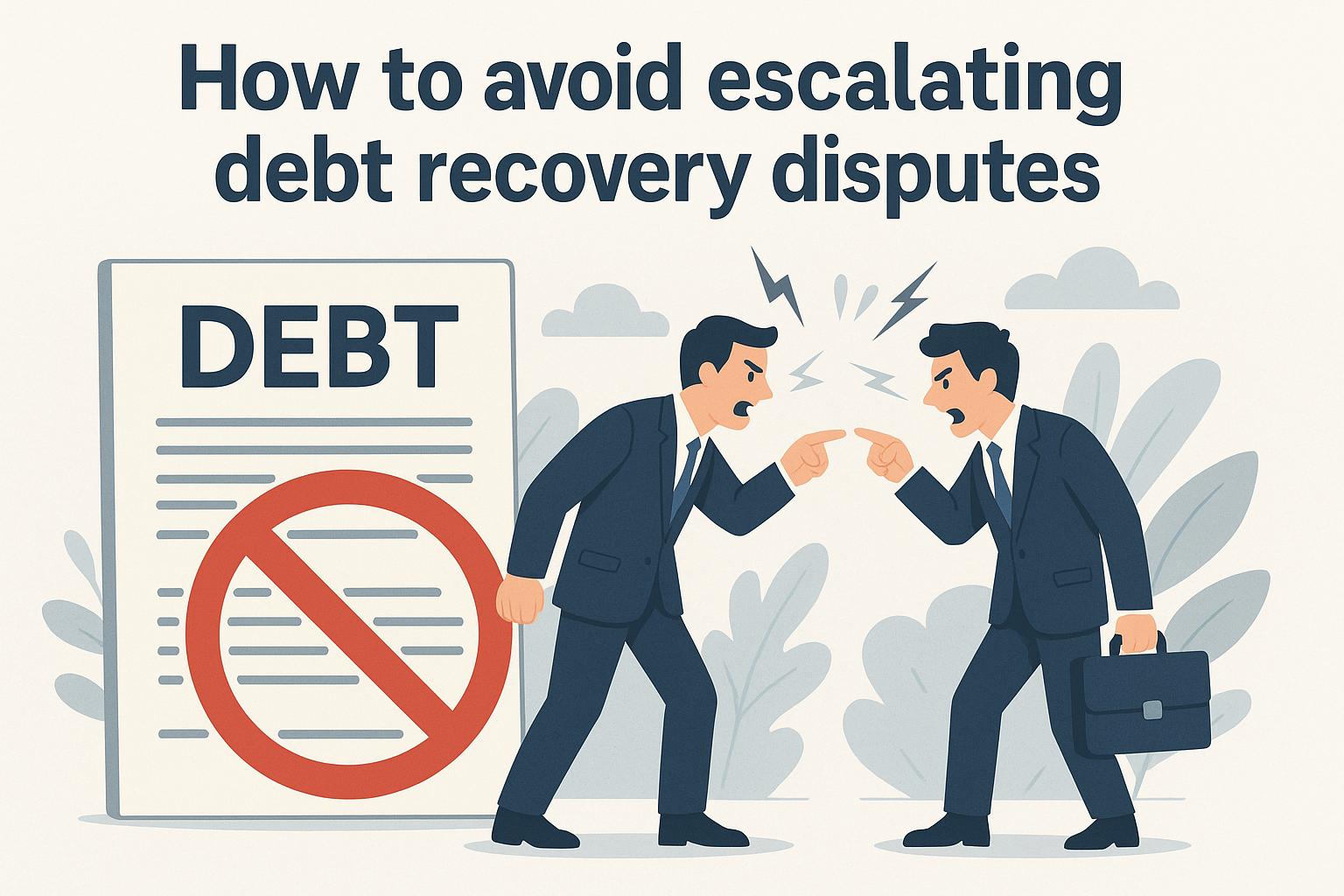
How to avoid escalating debt recovery disputes.
Avoiding Escalation in Debt Recovery Disputes
Debt recovery disputes can quickly become contentious, often leading to protracted and costly resolutions that neither creditors nor debtors are eager to endure. Implementing effective strategies to prevent the escalation of these disputes is crucial for both parties involved. Understanding how to manage these situations effectively can result in more amicable resolutions, preserving business relationships and minimizing expenditure on legal processes.
Understanding the Root Causes
To prevent disputes from escalating, it is essential to gain a comprehensive understanding of the root causes of debt issues. Problems often emerge due to various reasons, including:
Miscommunication between parties: Often, misunderstandings between creditors and debtors can lead to disputes, especially when communication is infrequent or unclear.
Unclear terms in contracts: Contracts that lack detail or specificity can result in disagreements regarding the obligations of involved parties.
Financial difficulties: Debtors may face genuine financial constraints, affecting their ability to meet repayment obligations.
By addressing these root problems, both creditors and debtors can work proactively to prevent further complications from arising. Transparency about financial situations and expectations is key to fostering a cooperative environment.
Establish Clear Communication Channels
One of the most effective methods to resolve conflicts before they escalate is to maintain clear communication channels. Both parties should come to an agreement on a preferred method of communication, which could include email, phone calls, or face-to-face meetings. Regular updates and proactive communication can significantly alleviate misunderstandings. Maintaining a professional tone, even in heated situations, is crucial for preserving a constructive atmosphere that is conducive to resolution.
Utilizing Mediation Services
Mediation can serve as a valuable tool to de-escalate disputes. Engaging a neutral third-party mediator can help facilitate constructive dialogue between the parties involved. This process tends to be less adversarial than litigation and can result in quicker resolutions. For those interested in mediation services, the American Arbitration Association provides more information and resources.
Review Contracts and Agreements Regularly
Ensuring that contracts are clear and concise is crucial in debt recovery scenarios. Regular reviews of these contracts help to ensure that all terms are understood and agreed upon by both parties, thus preventing misunderstandings. Any ambiguities should be clarified and resolved to avoid the potential for disputes.
Offering Flexible Repayment Plans
In situations where debtors are experiencing financial difficulties, offering flexible repayment plans can be an effective strategy to resolve disputes amicably. By renegotiating terms, creditors can often recover the owed amounts without resorting to legal action. This approach not only demonstratse goodwill but can also foster long-term business relationships, enhancing mutual trust and cooperation.
Documenting All Interactions
Thoroughly documenting all communications and agreements is a vital practice in debt recovery processes. Keeping detailed records provides crucial evidence should disputes escalate to legal proceedings. This documentation includes emails, meeting notes, and records of payments. A comprehensive paper trail helps support claims and clarifies any miscommunications that arise, making the resolution process smoother and more straightforward.
Conclusion
Preventing the escalation of debt recovery disputes requires a proactive approach, emphasizing clear communication, understanding, and flexibility. By implementing these strategies, creditors and debtors alike can resolve conflicts more efficiently, preserving valuable business relationships and avoiding unnecessary legal costs. Through proactive engagement, both parties can achieve satisfactory outcomes without the need for contentious and prolonged legal interventions.
- Posted by
 admin
admin - Posted in Uncategorized
 Feb, 22, 2026
 Comments Off on How to avoid escalating debt recovery disputes.