
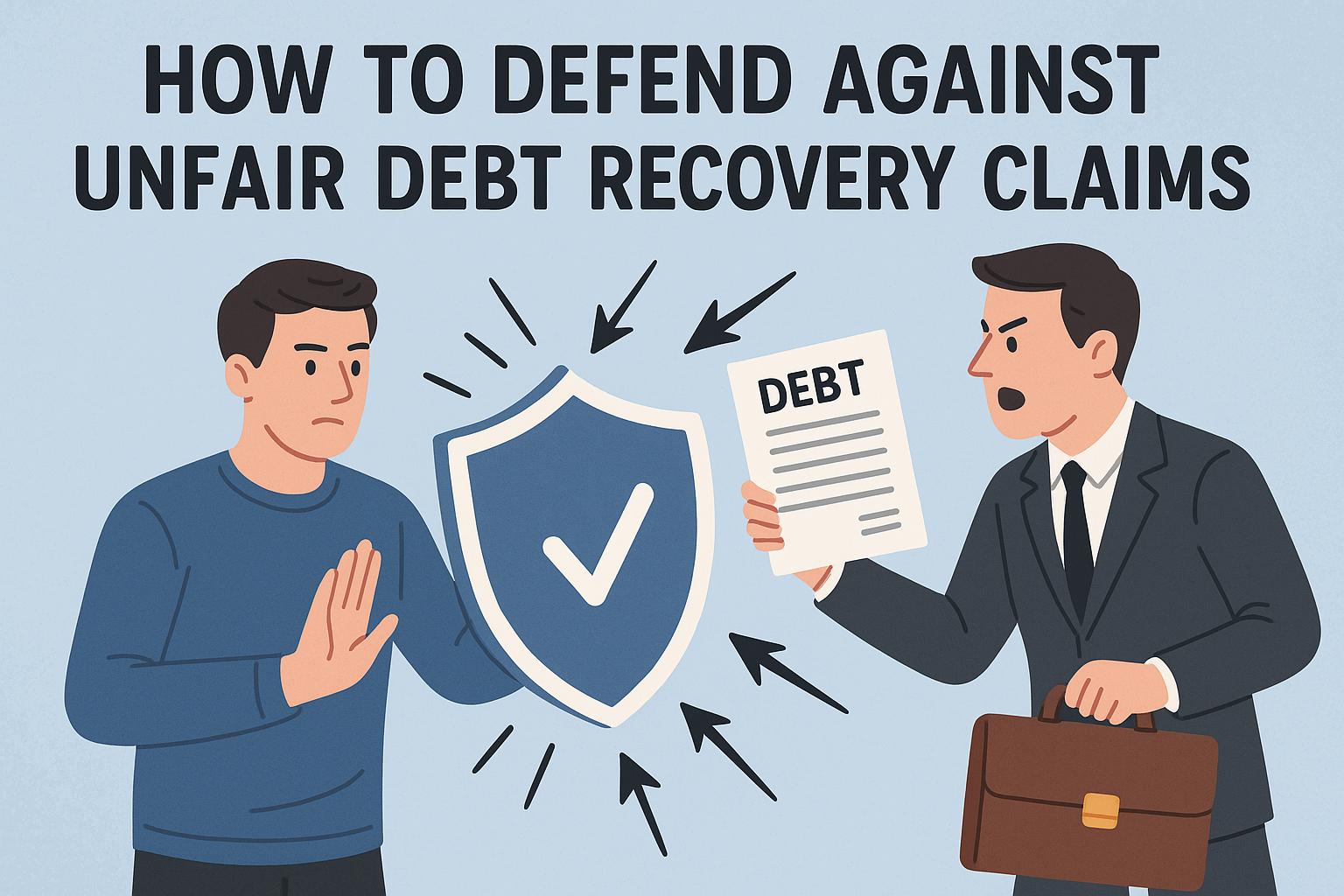
How to defend against unfair debt recovery claims.
Understanding Unfair Debt Recovery Claims
Debt recovery claims can be quite challenging to manage, particularly when the claims are unjust or incorrect. Many individuals find themselves facing demands for the repayment of debts they either do not owe or for amounts that are incorrectly calculated. Grasping the framework of debt recovery and the strategies to handle these unfair claims is crucial for navigating through such situations.
Reviewing the Debt Information
One of the primary steps in defending against unjust debt recovery claims is gaining access to all relevant details about the alleged debt and conducting a thorough review. The key here is to verify the legitimacy and accuracy of the claim. This can be accomplished by focusing on several critical areas:
Debt Validation: It is imperative to seek validation of the debt from the creditor or the debt collector. This typically entails requesting official documentation that substantiates the debt’s amount and origin. Such documentation could include the original loan agreement, a detailed accounting of the debt, and information regarding any transactions that have affected the debt over time.
Accuracy of Details: Verifying all details associated with the debt is crucial. Pay close attention to the claimed amount, the creditor’s name, and the date of the transaction. Ensuring accuracy in these details can help to identify any potential errors in the claim.
For guidelines on requesting debt validation, it would be beneficial to refer to legitimate financial advisory services that often provide resources and templates to assist in such requests.
Knowing Your Rights
A significant factor in defending against unfair claims is understanding your legal rights as a debtor. Different jurisdictions have specific laws and consumer protection acts that are relevant to debt recovery. For instance, in the United States, the Fair Debt Collection Practices Act (FDCPA) is a critical piece of legislation. Under the FDCPA, debt collectors are prohibited from using abusive, deceptive, or unfair practices when attempting to collect debts. This law serves to empower you by providing the knowledge needed to identify violations and safeguard your rights.
Being well-informed about your rights can serve as a powerful tool in protecting yourself against unfair practices, enhancing your ability to take appropriate action when necessary.
Responding to Debt Collectors
Effective and timely communication with debt collectors is another essential aspect of dealing with debt recovery claims. It’s important to approach this with the following strategies:
Written Communication: Always prioritize written communication with debt collectors. This creates a formal record of your interactions and serves as crucial evidence if any disputes were to arise. Documenting every correspondence ensures that you have a clear paper trail that outlines the conversations and agreements between the parties involved.
Disputing the Debt: If you contest the debt’s validity or believe it’s inaccurately attributed to you, it’s important to dispute it promptly. Time is of the essence here, as disputes are most effective when initiated within a specific period, often within 30 days of the initial contact about the debt. Prompt action not only asserts your rights but also places a clear obligation on the collector to justify the claim.
It can be beneficial to utilize official resources, such as the Consumer Financial Protection Bureau, which provides templates and advice for disputing debts, ensuring you’re equipped with the right tools to handle these disputes effectively.
Seeking Professional Advice
Should managing an unfair debt recovery claim become overwhelming, seeking professional advice can be particularly advantageous. Engaging with professionals such as debt counselors or legal experts can offer tailored advice based on your specific situation and jurisdiction. These professionals are equipped to guide you through the complexities of debt recovery, providing support and strategies to counteract unfair claims.
Additionally, resources such as local bar associations or certified credit counseling services often provide low-cost or free consultations. These services are designed to help individuals like you navigate the often complex landscape of debt recovery, offering insights and strategies to effectively manage claims and protect your financial well-being.
Concluding Thoughts
Defending against unfair debt recovery claims necessitates diligence in understanding your rights, verifying the legitimacy of claims, and maintaining effective communication with creditors. By following these guidelines, you can safeguard yourself from erroneous claims and mitigate potential financial damage.
Taking the time to understand the intricacies of debt recovery, along with knowing where to seek help, can make a significant difference when dealing with these situations. Through a combination of education, validation, and strategic communication, you can assert your rights and navigate through the complexities of unfair debt recovery claims successfully.
- Posted by
 admin
admin - Posted in Uncategorized
 Mar, 15, 2026
 Comments Off on How to defend against unfair debt recovery claims.