
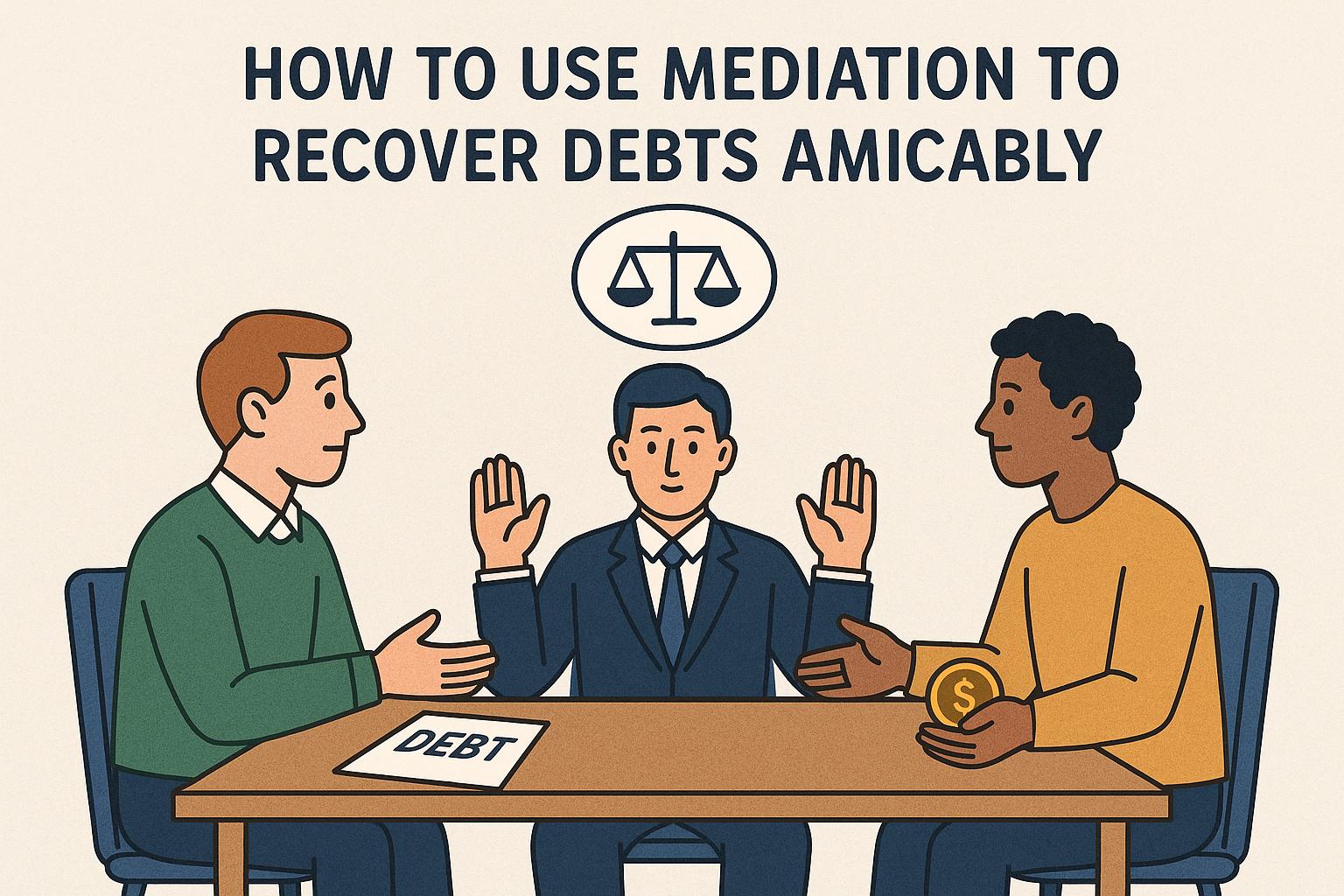
How to use mediation to recover debts amicably.
Understanding Mediation in Debt Recovery
Mediation plays a crucial role in the realm of debt recovery. It provides an opportunity for both creditors and debtors to resolve their issues without resorting to litigation. This approach is characterized by the involvement of a neutral third-party mediator who facilitates the negotiation process. The primary goal is to reach an agreement that satisfies both parties, avoiding the adversarial nature of courtroom battles.
The Role of the Mediator
A mediator acts as an impartial individual trained to assist in resolving disputes. Unlike a judge or arbitrator, the mediator does not impose a decision on the involved parties. Instead, their role is to help parties communicate more effectively, identify underlying issues, and explore potential solutions. This process encourages collaboration between parties and often results in more satisfactory and sustainable outcomes.
Benefits of Mediation
Mediation offers several benefits in debt recovery scenarios, including enhanced cost-efficiency, confidentiality, and the preservation of relationships.
1. Cost-Efficiency: Legal proceedings are often expensive and time-consuming. Mediation, in contrast, is typically more affordable and quicker, enabling both parties to save significant amounts of time and money.
2. Confidentiality: Mediation sessions are private, allowing parties to discuss sensitive issues openly without the risk of details becoming public. This privacy encourages honest communication and openness between the parties involved.
3. Preservation of Relationships: Since mediation is less adversarial than traditional legal proceedings, it often helps in maintaining or even improving existing relationships between creditors and debtors. This is particularly beneficial in situations where parties need to continue working together after the dispute is resolved.
Steps Involved in Mediation
The mediation process generally consists of several key steps that help to structure the resolution process.
Initial Contact: Either party can propose mediation. Once both parties agree to pursue this path, a suitable mediator is selected. This step is crucial for setting the stage for a productive mediation process.
Preparation: Both parties prepare for mediation by gathering relevant documents and identifying their key interests and objectives. This preparation ensures that all parties are clear about their positions and are ready to engage in meaningful discussions.
Mediation Session: During the mediation session, the mediator facilitates the discussion, allowing each party to present their case. Through guided discussions, parties explore various options to settle the debt, with the mediator helping to clarify misunderstandings and identify potential areas of agreement.
Agreement: If a consensus is reached, the terms are documented in a written agreement that is binding on both parties. This agreement serves as a clear record of the terms and is enforceable, providing assurance to both parties that their interests are protected.
Choosing the Right Mediator
Selecting a competent mediator is crucial for the success of the mediation process. It is advisable to choose someone who has experience in handling financial disputes, particularly those related to debt recovery. Professional organizations often provide directories of certified mediators, which can be useful resources. It is important to ensure that the chosen mediator understands both parties’ concerns and can communicate effectively to facilitate a constructive dialogue.
Learn more about mediation services and find professionals.
In conclusion, mediation serves as a powerful strategy for resolving debt issues amicably. It enables both creditors and debtors to arrive at mutually beneficial solutions while avoiding the costs, delays, and stress associated with legal proceedings. By focusing on communication and collaboration, mediation transforms potentially contentious situations into opportunities for constructive resolution. This process not only addresses the current dispute but also lays the groundwork for healthier, ongoing relationships between parties, reducing the likelihood of future conflicts.
Through mediation, parties are empowered to take control of their situation and reach an agreement that reflects a genuine understanding of each other’s needs and constraints. By bypassing the adversarial legal system, mediation encourages a more humane and effective approach to conflict resolution, one that prioritizes the dignity and autonomy of all parties involved.
- Posted by
 admin
admin - Posted in Uncategorized
 Jan, 25, 2026
 Comments Off on How to use mediation to recover debts amicably.